SIGHT Speakers
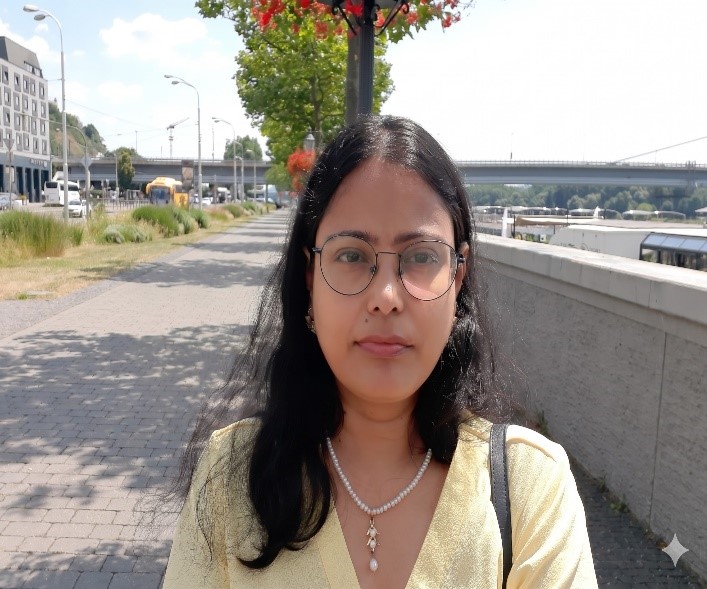
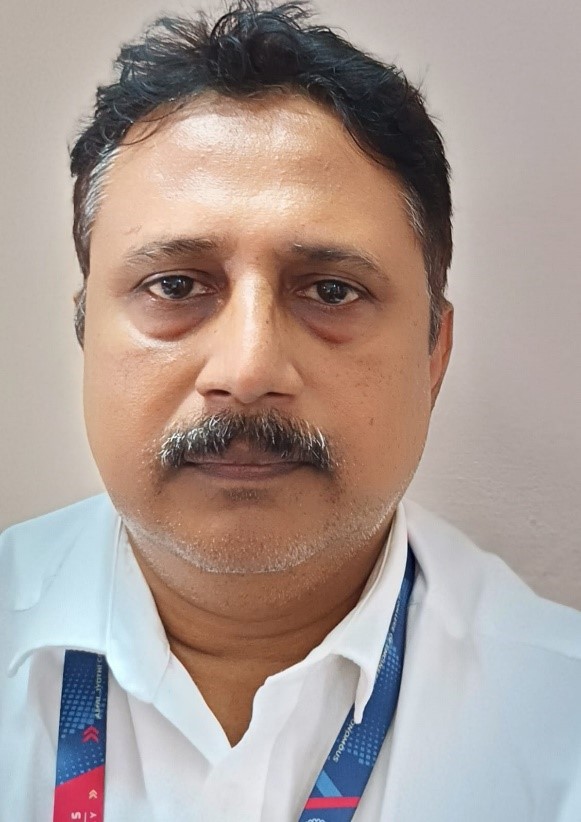
Distinguished speakers from the IEEE AP-S SIGHT Committee at WAMS 2026.



AP-S Committee On Promoting Equality (COPE)
Our goal is to mitigate inequality in gender, race, and geographical locations through several initiatives:
- Knowledge dissemination via IEEE chapters
- Transfer of technology know-how via the IEEE Smart Village Program
- Emphasis on STEM (science, technology, engineering, and mathematics) education to grow human resources worldwide
Additionally, we strive to be good stewards of planet Earth and promote symbiotic coexistence with our environment.
For more information, please visit: https://aps-cope.org/
COPE Invited Talks
Meet the distinguished COPE invited speakers of WAMS 2026 — promoting equality and excellence in antenna, microwave, and RF research across diverse communities.

Abstract
Meta surfaces have attracted interest in scientific study and engineering because of their ability to effectively modulate electromagnetic (EM) wave amplitude, phase, or polarization. Metasurface-based electromagnetic devices provide benefits compared to conventional technologies, including simple architectures, reduced expenses, and limited control intricacy. Among various applications of metasurface, radar cross section reduction as well as reflector for 6G wireless communication is a specific point of interest.
In the design phase of such metasurface, Characteristics Mode Analysis (CMA) has a critical role to play as it provides refined design guidelines. In this talk, two different designs of electromagnetic meta surface are illustrated by employing CMA for RCS reduction and metasurface reflector application respectively.
Abstract
Microwave Imaging (MWI) exploits the dielectric contrast between normal and malignant breast tissues to detect cancer. This talk will demonstrate recent advances in microwave breast imaging — leveraging Machine Learning (ML) and Deep Learning (DL) — as reported in contemporary literature. The discussion will focus on radar-based and tomographic-MWI configurations, highlighting signal pre-processing, image transformations, and automated classification strategies. We will showcase how Artificial Intelligence (AI)-driven models enhance tumor detection and localization, with several experimental studies reporting significantly high accuracies when employing techniques such as scalograms, sinograms, and Specific Absorption Rate (SAR) maps.
Furthermore, the talk will critically assess the inherent limitations of MWI, including dielectric mismatch and noise effects that contribute to localization errors, poor depth resolution, and the ill-posed nature of image reconstruction. From an AI perspective, challenges such as limited standardized clinical validation, heavy dependency on phantom data, and restricted generalization of data-driven models will be addressed. Finally, engineering and translational aspects including SAR-compliant operation, computational efficiency, and the feasibility of real-time screening will be highlighted, outlining future research directions toward reliable, clinically deployable, AI-assisted MWI systems for use in low-resource healthcare settings.
Abstract
This paper presents the design and performance analysis of a high-selectivity band pass filter (BPF) based on high-Q ceramic coaxial resonators integrated into a miniature shielded Surface Mount Technology (SMT) package. Designed for the 978–1090 MHz passband, the filter addresses the critical needs of modern RF front-ends, such as low insertion loss, high power handling, and extreme thermal stability. The architecture utilizes a multi-pole configuration of ceramic-loaded coaxial cavities to achieve a low insertion loss of 0.6 dB while ensuring sharp roll-off.
The high-quality factor (Q-factor) of the resonators enables an outstanding close-in rejection of 20 dB minimum at both the upper and lower stopbands. The design maintains a stable VSWR across the operating range, minimizing in-band ripple and facilitating seamless integration into receiver and transmitter RF chains. Qualified for temperatures ranging from –40°C to 85°C and resilient to extensive solder reflow cycles, this BPF is an ideal candidate for Traffic Collision Avoidance Systems (TCAS), aeronautical radio navigation, and fixed satellite communications where spectral purity and mechanical robustness are paramount.
Abstract
Recent advances in electromagnetic wave interaction with biological tissues and its implications for non-invasive sensing and diagnostics — including research activities carried out at ‘Amritatarang – Advanced RF & Microwave Research Lab’ — will be presented. The discussion focuses on how tissue dielectric properties govern microwave propagation, penetration depth, field confinement, and resonance behavior across biologically relevant frequency bands.
The talk highlights microwave sensor and antenna based methodologies developed for biomedical applications including non-invasive glucose monitoring, hepatic steatosis detection, tissue dielectric characterization, and microwave imaging. Experimental and simulation studies using multilayer tissue models demonstrate the influence of tissue composition, water content, and frequency-dependent permittivity on sensor sensitivity, selectivity, and measurement reliability. The role of specific absorption rate, electromagnetic safety, and optimized operating frequency selection will also be addressed, establishing a pathway toward compact, low-cost, and clinically translatable microwave diagnostic platforms for early-stage physiological monitoring and disease detection.